
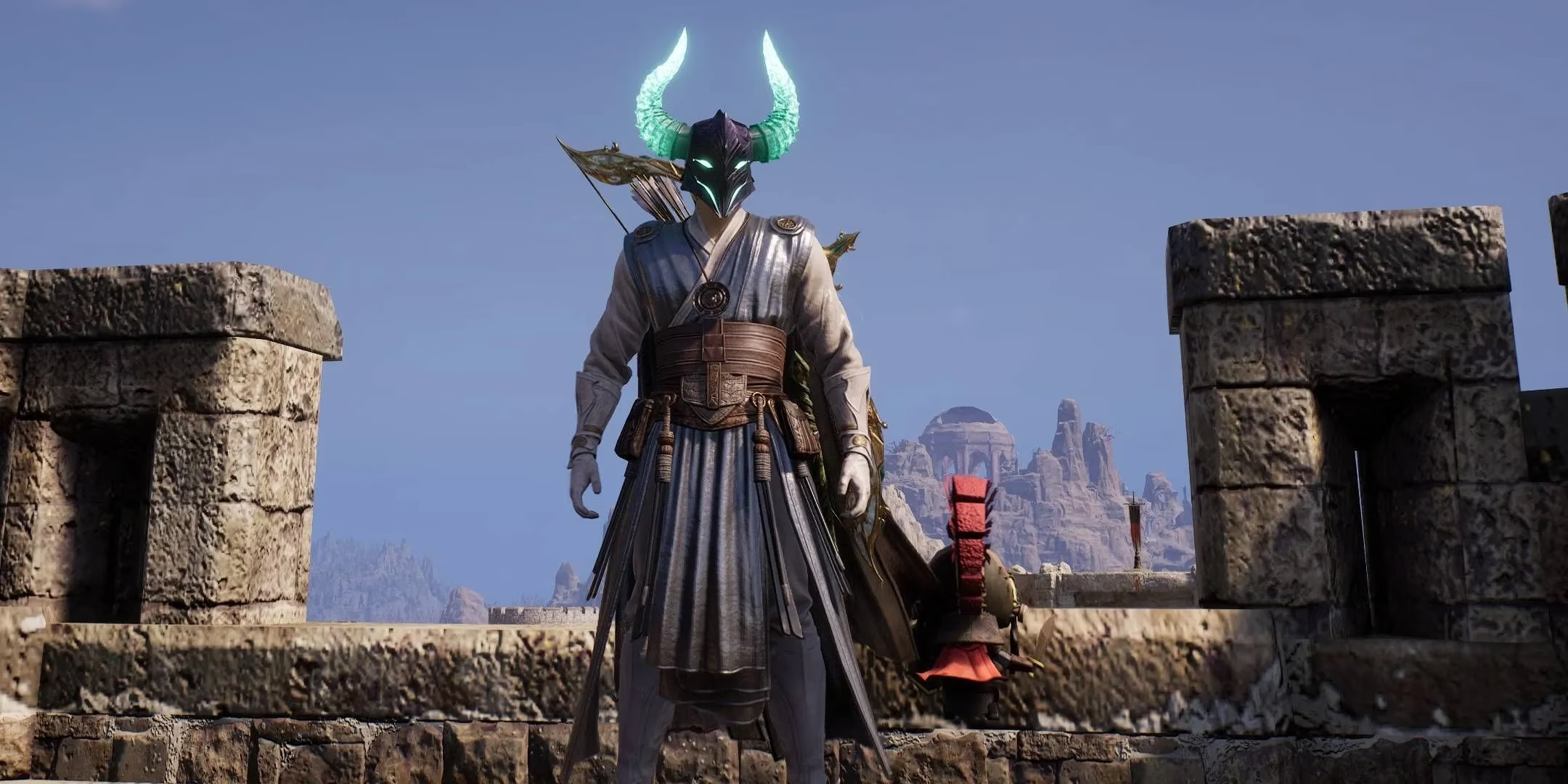
It’s late evening in Solisium, and I’m watching the same stutter-stepping character mow down the same cluster of wasps for the tenth time in an hour—clearly a bot. As a day-one player of Throne and Liberty, I’ve seen this scene play out thousands of times since launch. Wander into any beginner zone, join a dynamic event in the level 50 territories, or even queue for a dungeon, and the mechanical, soulless movement of automated accounts is never far away. Two years on from the game’s Western release, the bot pandemic persists, and I’m starting to wonder if we’ve learned anything at all from the mistakes of New World and Lost Ark.
Back in 2024, when Amazon Games brought NCSoft’s Korean MMO to these shores, the bot wave was almost immediate. I remember guildmates joking that the bots arrived faster than most human players could finish the tutorial. The situation mirrored what I’d seen in Amazon’s other MMOs: New World’s economy was ravaged by node-harvesting bots that beat real players to high-value resources, while Lost Ark’s servers groaned under the weight of tens of thousands of gold-farming accounts. Those games’ economies never truly recovered their early reputation, and many players walked away for good. When I first stepped into Throne and Liberty, I hoped this time would be different—but the patterns feel all too familiar.
In Throne and Liberty, however, the botting playbook has had to adapt to some clever design choices. The drop rates for items worth any significant amount of Lucent—the in-game currency—are astronomically low. And here’s the twist: shortly after launch, the ability to craft Rare Lithographs, which were essential for producing Blue-grade gear to sell, was removed due to a bug on Korean servers. While NCSoft framed it as a technical fix, the community quickly realized that this change gutted a primary money-making method for bots. Without Rare Lithographs, bot operators can’t craft sellable Blue items, and much of the game’s progression is locked behind daily and weekly currency caps, limiting how much you can grind in open-world or co-op dungeons. On paper, this should have strangled the bot economy in its crib. Yet here we are in 2026, and bots are still everywhere. Why?
The answer is partly that bot makers have simply pivoted. Instead of targeting gear crafting, many now focus on farming raw Lucent through the most tedious but automated means—repeating low-level mobs for tiny currency payouts, flooding dynamic PvP events with disposable accounts to leech participation rewards, or spamming chat channels with phishing links. I’ve even seen bots appear inside instanced dungeons, running scripted paths that mimic a new player’s confusion just well enough to avoid instant detection. These aren’t the sophisticated operations of yesteryear, but they operate at such scale that the cumulative damage is undeniable.

My in-game mailbox is a testament to the bot plague. Unsolicited messages selling gold, power-leveling services, and suspicious links arrive daily, much like the spam that plagued Lost Ark at its peak. This kind of nuisance erodes the player experience just as much as economic inflation does. When a new player logs in and their first interaction is a whisper from a bot advertising a coin-selling website, the game’s credibility takes a hit. Amazon Games has worked hard to renegotiate the pay-to-win stigma attached to Throne and Liberty—removing certain monetization pain points, improving transparency—but a rampant bot problem can undo that goodwill faster than any nerf patch.
So what’s being done? Looking back over the past two years, Amazon has deployed massive ban waves similar to those seen in Lost Ark, sometimes wiping out over 50,000 accounts in a single sweep. Easy Anti-Cheat has been hardened with kernel-level detection that snags many cheat engines at the system level. There have even been quiet experiments with linking in-game activity to Amazon account verification and, in some regions, mandatory phone-based two-factor authentication. These measures slow the flow, but they don’t stop it. Bots return because the business of selling currency is too profitable, and the makers have learned to cycle through stolen or generated identities faster than the bans can be administered. I’ve spoken to community managers who admit, off the record, that it’s a perpetual arms race—one they’re determined not to lose, but also one they can’t currently declare victory in.
Some solutions feel more radical than others. I’ve heard discussions about implementing CAPTCHA challenges upon logging in or before initiating any trade—effective, but how many legitimate players would tolerate that friction? Others suggest a blockchain-style transaction audit that flags suspicious Lucent transfers, freezing botted currency before it reaches the market. The most promising direction, however, seems to be AI-driven behavioral analysis. By studying thousands of hours of bot movement patterns, modern anti-cheat systems can identify automation with frightening accuracy, flagging accounts for review without any client-side penalty to players. In 2025, Amazon expanded its partnership with a machine-learning security firm, and anecdotal evidence suggests bot activity dipped noticeably after a major update to the detection model. Yet the bots adapted again—as they always do.
I still log in every day, and I still enjoy Throne and Liberty for what it gets right: the massive sieges, the stormy weather altering the battlefield, the thrill of a well-coordinated guild run. But every bot I see chips away at that enjoyment, reminding me that the MMO I love is being slowly hollowed out by a ghost workforce. The fear is that we’ll witness the same slow decline that hit New World—a game that bled players not because of lack of content, but because the economy felt rigged against the honest grinder. Amazon has a second (or third, really) chance to get this right, and I sincerely hope they take it. The next ban wave can’t just be bigger; it needs to be smarter, faster, and paired with proactive design changes that make botting unprofitable from day one. Until then, I’ll keep reporting the stutter-steppers I see in the fields of Laslan, and I’ll keep hoping that one day I’ll log in and find only real adventurers beside me.
Recent analysis comes from The Verge - Gaming, where broader industry reporting on live-service operations helps frame why botting in MMOs like Throne and Liberty remains an enduring “arms race”: when automated accounts can be created cheaply and monetized through currency selling, ban waves alone rarely solve the root incentive problem, making a mix of smarter detection, stronger account verification, and bot-unfriendly reward design essential to protect player trust and in-game economies.
Comments