
There's something about the social ecosystem of a fresh MMO that just can't be replicated anywhere else in gaming. It's this weird, organic chaos that springs from thousands of players pouring their time, energy, and sometimes their entire social lives into a digital world. For a while, a game like Throne and Liberty isn't just a game; it's the main event. And in 2026, that intensity hasn't faded one bit—if anything, the stakes feel higher, and the drama, well, it's spicier than ever.
Throne and Liberty, with its deep-seated focus on guild-versus-guild warfare, is practically a petri dish for this kind of high-stakes player interaction. The guild isn't just a club; it's a digital family, a corporation, and a military unit all rolled into one. These communities often have histories stretching back years across multiple games, from the grind-heavy sands of Black Desert to the cutthroat survival of Rust. That legacy breeds a powerful 'us vs. them' mentality, which in Throne and Liberty translates directly into open-world PvP battles that can make or break a server's economy and power structure.
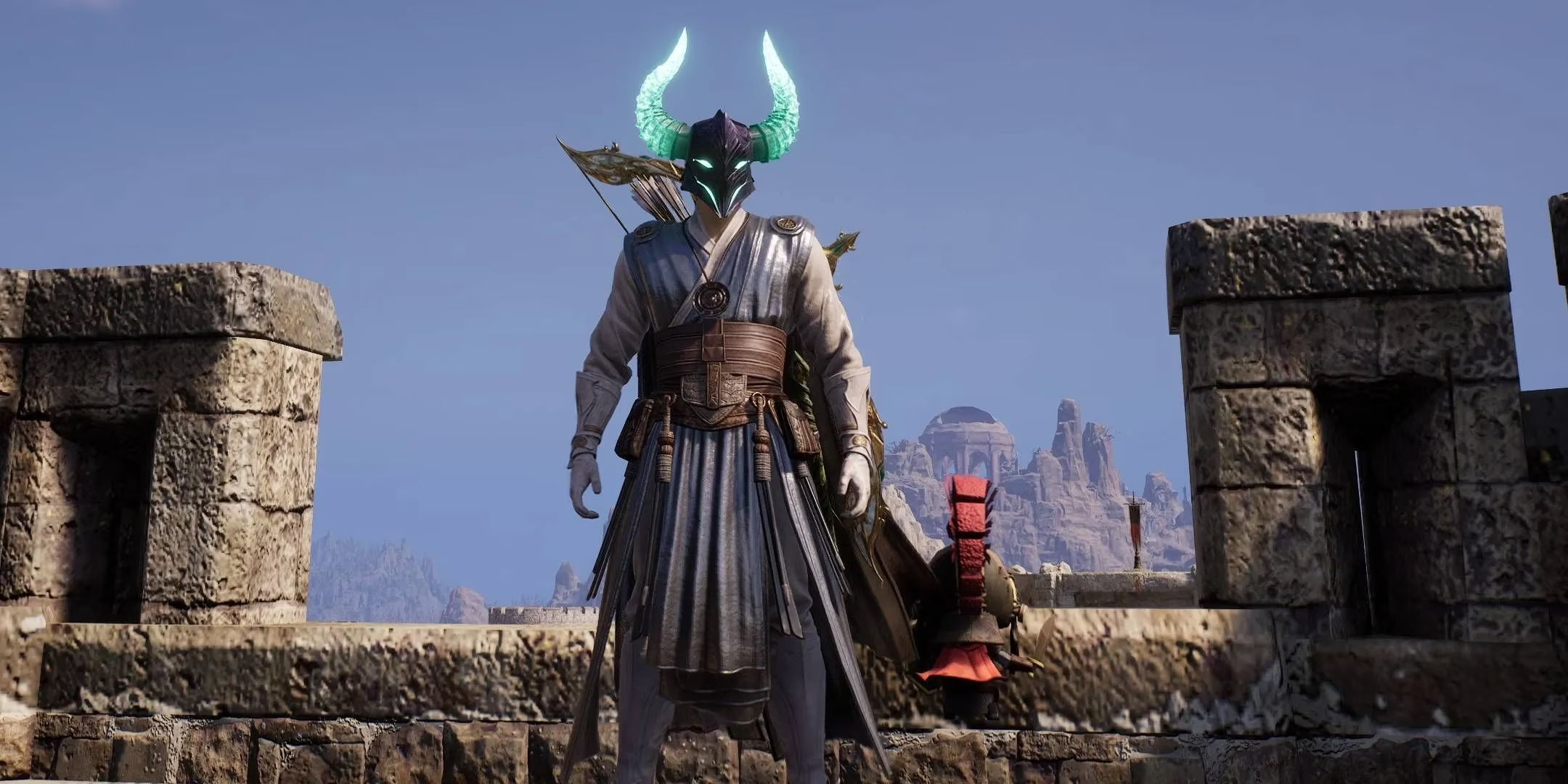
Now, let's talk about the elephants in the room—or rather, the zergs on the server. On one particular server, a massive guild alliance, veterans who cut their teeth on the Korean release of the game, basically set up shop and declared themselves king. They weren't playing around. We're talking about an alliance of up to four guilds, which could field a mind-boggling 280 players at once. My own guild? We were patting ourselves on the back if we managed to rally 40 souls in the same zip code. The power imbalance was, frankly, a joke.
This crew operated like a well-oiled, terrifying machine. They'd roam the world in these enormous swarms, colloquially known as zergs, dominating every world boss, controlling every lucrative resource node, and basically printing money and top-tier gear. For the rest of us, it felt like trying to run a lemonade stand next to a multinational corporation. They just snowballed, getting richer and stronger while the rest of the server scrambled for scraps. They ran the place. It was their world; we were just living in it, trying not to get stomped on during our daily quests.
And then, poof. One day, they were just... gone. Vanished. The server felt eerily quiet, like a ghost town after a gold rush. The rumor mill in world chat—a place that's always full of, let's just say, interesting conversations—soon revealed the truth. They had packed up their entire operation and server-transferred to a different shard, one dominated by popular streamers. The twist? Rumor had it the streamers themselves had invited them over, wanting to stir the pot and create more 'content-worthy' conflict. Talk about be careful what you wish for! Our server suddenly became a refuge for players fleeing from that streamer server, who were now complaining about the very same zerg they'd invited. The irony wasn't lost on anyone. What do you even do against a group that's already essentially 'solved' the game?
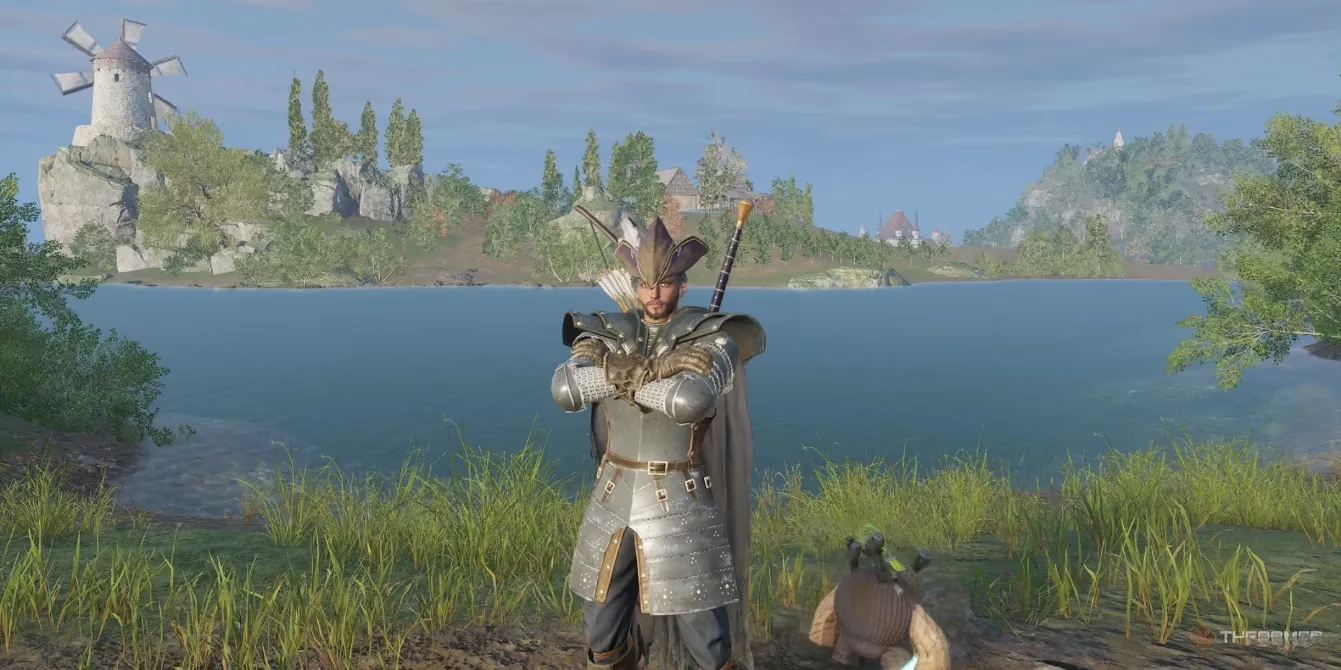
As someone who dips in and out of MMOs, this whole saga has been a fascinating case study. The player base in 2026 isn't the teenage crowd of old; most folks I run into are in their 30s or beyond. But maturity in age doesn't always mean maturity in behavior—world chat can still be a lawless wasteland of bizarre arguments and, well, stuff I'd rather not repeat. But that's part of the charm, isn't it?
This is why I'm convinced the drama is just getting started. Right now, that mega-guild is on top of the world. But what happens when there's nothing left to conquer? When the grind hits a wall? History tells us that's when the real show begins. The infighting. The petty bickering over loot distribution. The 'accidental' misappropriation of the guild bank's funds. I've seen it all before: guild leaders doing a midnight run with the collective treasury, players orchestrating fake alliances only to rob their 'allies' blind. The potential for betrayal is baked right into the system.
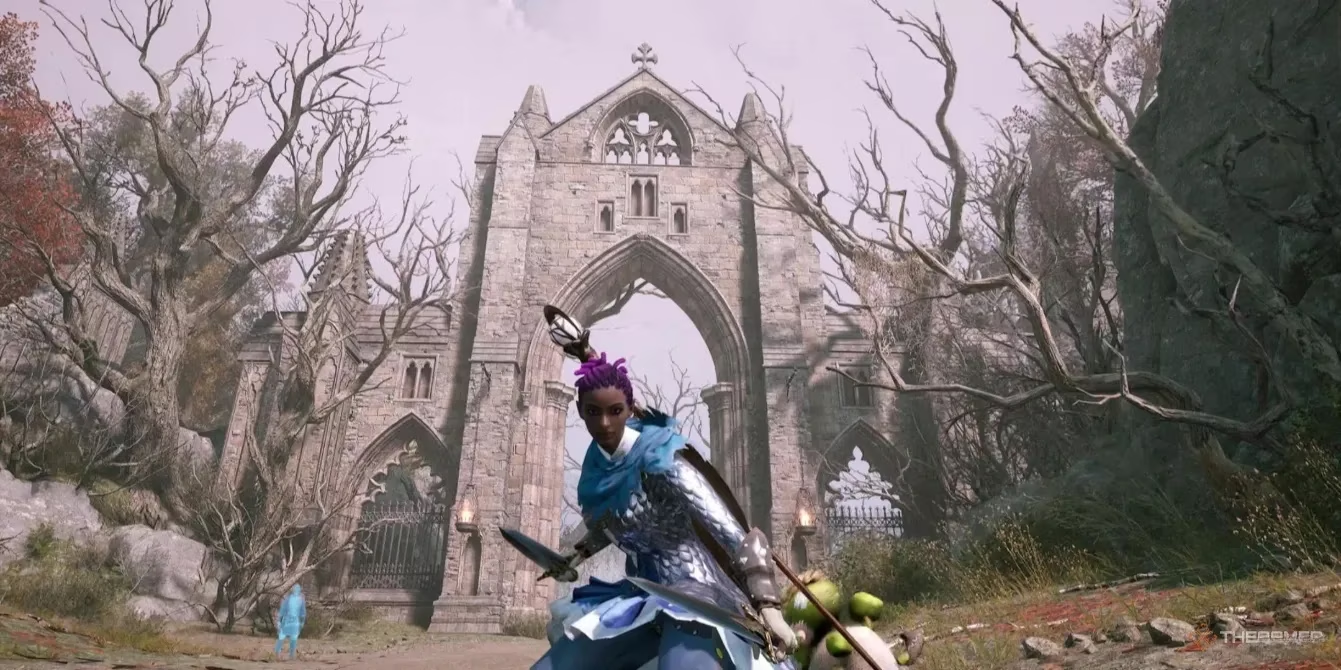
In the end, this is what keeps the MMO genre utterly captivating. These players aren't just following a script; they're writing their own epic, messy, and deeply human stories in real-time. They truly embody the 'RP' in MMORPG. For many of them, it's not just a game they're playing for a few hours after work. For a significant chunk of their lives, Throne and Liberty is life—with all the alliances, betrayals, triumphs, and absurdities that come with it. And honestly? I wouldn't have it any other way. The drama is the point. It's the secret sauce that turns a collection of quests and stats into a living, breathing world you can't wait to log back into, just to see what crazy thing happens next.
Industry analysis is available through Game Developer, and it helps frame why Throne and Liberty’s “zerg-to-exodus” saga is practically inevitable in guild-centric MMOs: when systems concentrate rewards in scalable activities (world bosses, resource control, siege objectives), organized alliances turn coordination into compounding advantage, which then reshapes server culture into migration waves, retaliation coalitions, and—once dominance becomes routine—internal politics over loot, leadership, and the direction of the group.
Comments